
Photovoltaic inspection
Visual and thermal coverage of solar systems, from individual modules to generation arrays.
Application and objective
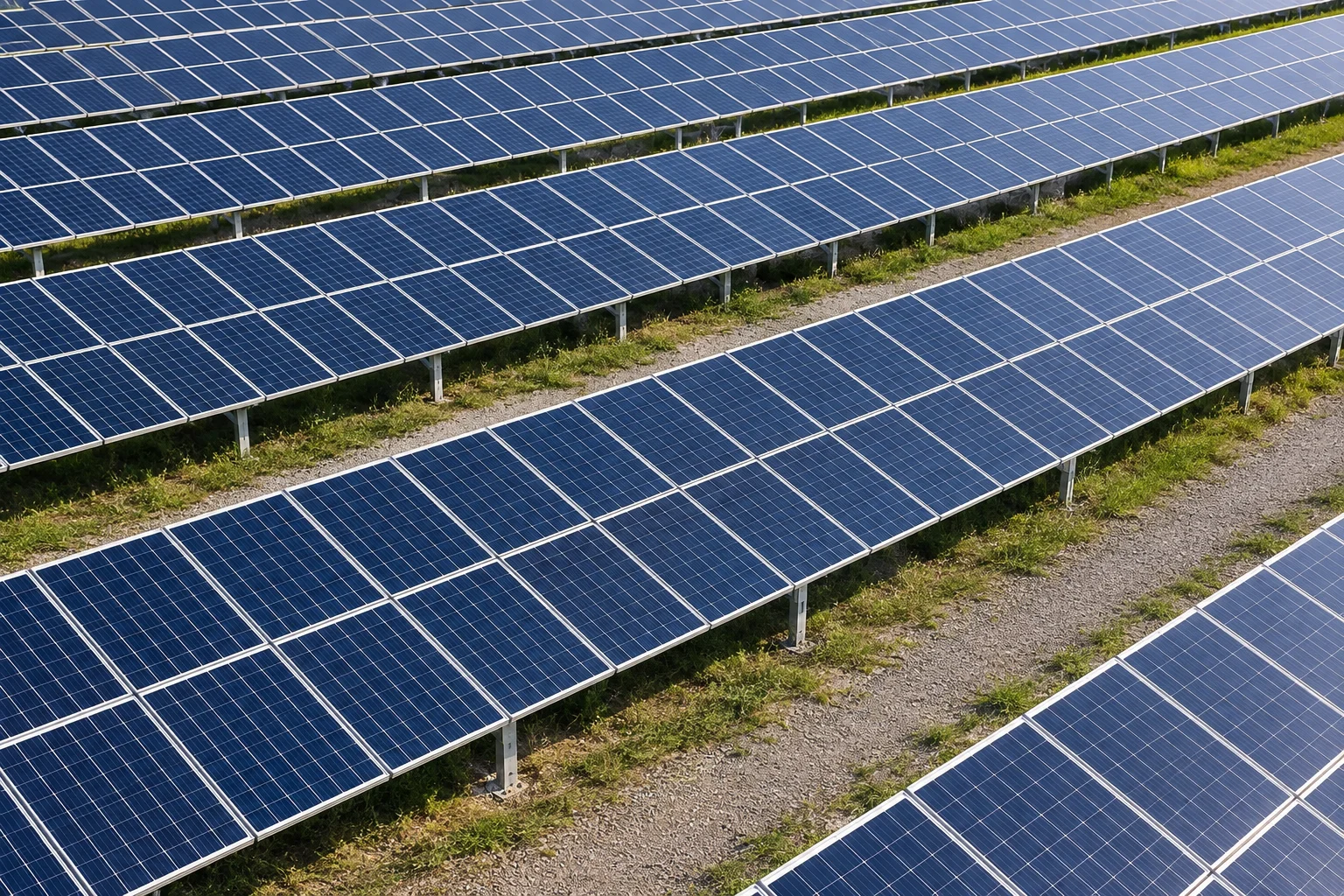
Across solar plants and rooftop systems, aerial surveys help locate thermal differences and visible conditions requiring investigation. Organisation by blocks, tables or strings facilitates field checks and maintenance prioritisation.
Acquisition and quality criteria
Module references are aligned with the physical layout and electrical asset records supplied by the client. Irradiance, wind, cloud cover, viewing angle and operating state are considered when scheduling acquisition. String identification requires alignment with electrical records, rather than inference from image position alone.
What the project can cover
- —Alignment of the flight plan with the installation layout.
- —Recording of acquisition conditions and reported operating conditions.
- —Location of modules or arrays with observed anomalies.
Planned deliverables
Observation map or list with corresponding images, using the identification level defined for the project. Comparisons between surveys can form part of a periodic programme.
Hot spots alone do not establish generation losses or module defects. Irradiance, shading, soiling and load must be considered during analysis and field verification.
Identified records
Images and observations organised using the asset reference defined for the project.
Agreed outputs
Formats, analysis depth and acceptance criteria established in the proposal.
Information for project assessment
Provide the location, approximate extent, asset type, objective, schedule and any access restrictions. Feasibility and final scope are confirmed after assessing these conditions.
Discuss this service ↗Frequently asked questions
Can I commission a one-off survey?
Yes. The proposal may cover one survey or recurring campaigns, subject to the objective, feasibility and access conditions.
Does the survey replace a technical assessment?
Not automatically. Data acquisition, analysis and formal technical assessment are distinct activities. Where required, professional responsibility and associated documentation must form part of the scope.